Forget gold, oil or crypto. Southeast Asia’s hottest commodity right now is feeling good according to the Global Wellness Institute’s 2026 Monitor, launched this month in Phuket, puts the global wellness economy at a record US$7.5 trillion for 2025, up 8.9% in a single year and heading for almost US$11 trillion by 2030. Asia-Pacific is the world’s second-largest wellness region at US$2.28 trillion, and Asian wellness tourism spending jumped 15.6% last year.
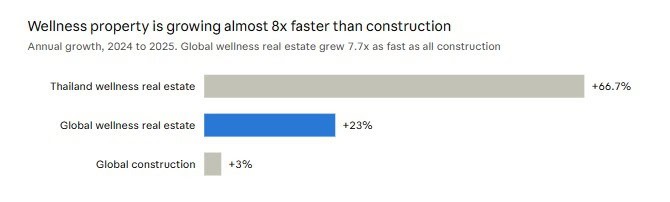
Next door, Thailand’s wellness economy grew 8.8% to US$46.5 billion. Its fastest-growing slice wasn’t massage oil or yoga mats. It was wellness real estate, up 66.7% to US$1.2 billion. Property people, underline that twice.
Bricks, mortar and mindfulness
Wellness real estate (homes, resorts and whole communities designed to make people healthier) is now the fastest-growing corner of the entire wellness economy.
The global market is forecast to pass US$1 trillion in 2027, and Asia-Pacific has been growing at 25.8% a year since 2019, faster than the world average.
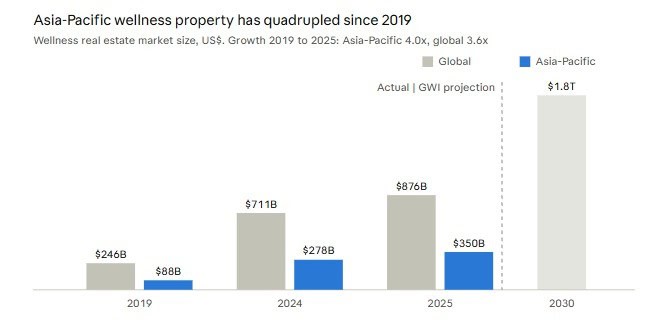
In plain English: buyers and guests will pay more for clean air, natural light, quiet, good food and a reason to get up early. Developers who build for that are outgrowing everyone else.
Cambodia checks in
Cambodia has stopped being the region’s best-kept secret and started becoming a serious health and wellbeing address.
- Mountain retreats are here. Samanea Wellness Resort opened in February 2026 across 40 hectares of the Cardamom Mountains in Pursat, with 32 private villas, an ozone pool, a fitness house and an organic river farm. Its sister property, Samanea Beach Resort & Spa, anchors the Kep coast.
- The islands are in play. Six Senses Krabey Island set the luxury benchmark off Ream, and Thai operator Akaryn has announced a private-island destination spa and retreat in the same waters.
- Heritage sells. Anantara Angkor runs wellness experiences built on Khmer teachings, while Knai Bang Chatt in Kep hosts yoga retreats by the sea.
- Government is on board. In May 2026 the Ministry of Tourism and the private sector set out to lift high-end wellness tourism, and ASEAN has published new regional reports on health and wellness tourism under its 2026–2030 tourism plan.
Where Abode comes in
Every health and wellbeing project, from a ten-villa jungle hideaway to a branded residence tower, runs into the same property questions: where to build, what it’s worth, where the team lives and who buys the homes. That’s our patch.
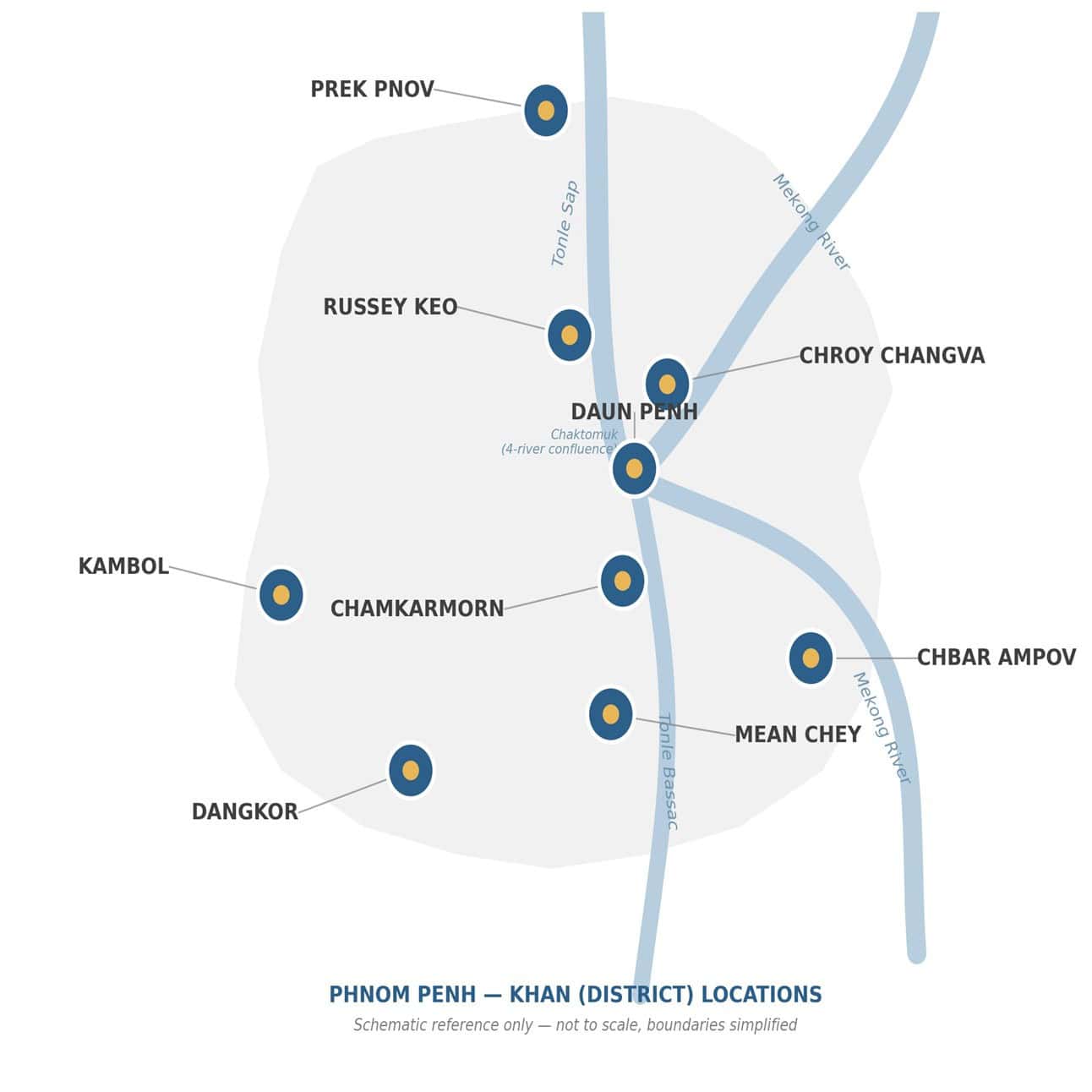
- Site sourcing and due diligence. Abode covers Phnom Penh, Siem Reap, Kampot and Sihanoukville: the city, the temples, the pepper coast and the island gateway. Fifteen-plus years in the market and more than US$10 million in transactions mean we know which titles are clean and which riverside “bargains” go underwater in September.
- Independent valuations. Investors, lenders and joint-venture partners get valuation reports they can put in front of a board.
- Leasing for operators. Executive homes for general managers, staff housing close to site, and long-stay villas for guests who come for a week and stay for a season.
- Abode Collection. Our off-market portfolio of properties from US$500,000 is made for founders, investors and wellness devotees who want the retreat lifestyle year-round, minus the checkout time. Viewings are private and by request; nothing is publicly listed.
The health and wellbeing wave isn’t a passing fad; it’s a structural shift in what people expect from the places they live, work and holiday.
Cambodia is still early on the wellness real estate curve, which is exactly where the best sites and keenest prices are still found.
Building a retreat, investing in one, or simply after somewhere calmer to live? Talk to Abode at abode-realestate.com, or ask about a private Collection viewing.